Wolverine Stack Peptide Benefits: What Science Really Says About BPC-157 and TB-500
Introduction: Why Everyone Is Talking About the Wolverine Stack
The human body is remarkably good at repairing itself. A small cut closes, a strained muscle gradually rebuilds, and damaged tissues begin a carefully coordinated process of inflammation, repair and remodelling. However, anyone who has experienced a stubborn tendon injury, recurring joint pain or a prolonged period away from training knows that recovery is not always straightforward.
This has led to growing interest in compounds that may influence the body's natural healing processes. Among the most talked-about combinations in fitness, bodybuilding and biohacking communities is the Wolverine Stack — a combination of two research peptides:
- BPC-157
- TB-500 (a fragment related to thymosin beta-4)
The name itself comes from the fictional character Wolverine, famous for his ability to rapidly regenerate after injury. While the comparison is obviously fictional, the idea behind the nickname is clear: people are interested in whether these peptides can support faster recovery and improved tissue repair.
Online communities are filled with impressive recovery stories. Some athletes claim they returned to training faster after tendon injuries. Others report improvements in chronic aches, joint discomfort and soft tissue problems that had previously limited their performance.
But there is an important question:
Does the science actually support the reputation of the Wolverine Stack, or has internet enthusiasm moved faster than the evidence?
The answer is more complicated than a simple yes or no.
Research into BPC-157 and TB-500 is genuinely interesting. Laboratory studies have demonstrated biological effects that could theoretically influence healing pathways. However, much of the research remains at the pre-clinical stage, meaning we do not yet have the same level of evidence that exists for approved medical treatments.
This article explores the proposed benefits of the Wolverine Stack, what researchers currently understand about BPC-157 and TB-500, the limitations of the evidence, potential risks, and why these peptides have attracted so much attention.
What Is the Wolverine Stack?
The Wolverine Stack generally refers to the combination of:
BPC-157
BPC-157 is a synthetic peptide derived from a protective protein sequence found naturally in gastric juice. It has been studied primarily in laboratory models for its possible effects on:
- Tissue repair
- Blood vessel formation
- Inflammation
- Tendon and ligament healing
- Gastrointestinal protection
The name BPC stands for Body Protection Compound, reflecting the original interest in its protective effects.
TB-500
TB-500 is a synthetic peptide based on a section of thymosin beta-4, a naturally occurring protein found in many tissues.
Thymosin beta-4 plays roles in:
- Cell movement
- Tissue development
- Blood vessel formation
- Wound healing
Researchers have investigated whether modifying this pathway could influence recovery after injury.
Why Combine BPC-157 and TB-500?
The theory behind combining these peptides is that they may affect different parts of the healing process.
A simplified explanation:
BPC-157
→ May influence local repair mechanisms
→ May support blood vessel development
→ May affect inflammation pathways
TB-500
→ May influence cell migration
→ May support tissue regeneration pathways
→ May affect wound healing processes
The idea is that one compound may support the repair environment while the other may encourage cellular movement and regeneration.
However, it is important to emphasise:
This is a proposed mechanism based largely on laboratory research, not a proven clinical treatment pathway.
Why Has the Wolverine Stack Become So Popular?
The popularity of the Wolverine Stack is not surprising.
Modern fitness culture places enormous emphasis on:
- Training harder
- Recovering faster
- Avoiding injuries
- Extending athletic longevity
For someone who trains five or six days a week, an injury can feel devastating. A shoulder problem, elbow tendon issue or knee injury can interrupt months or years of progress.
Traditional approaches to recovery often involve:
- Rest
- Physiotherapy
- Progressive rehabilitation
- Strengthening exercises
- Time
These approaches remain the foundation of injury recovery.
However, the idea of a compound that could accelerate biological repair is naturally appealing.
This is especially true among:
- Bodybuilders
- Professional athletes
- Combat sports competitors
- Biohackers
- High-performance communities
Social media has also played a major role. A single story of someone returning to training after a difficult injury can spread rapidly, creating excitement around a compound before large clinical studies have been completed.
Understanding How the Body Heals
To understand why peptides such as BPC-157 and TB-500 attract attention, it helps to understand the basic healing process.
When tissue is injured, the body follows several overlapping stages.
Stage 1: Inflammation
Immediately after injury, the immune system responds.
This involves:
- Increased blood flow
- Immune cell recruitment
- Release of signalling molecules
Inflammation is often viewed negatively, but it is essential. The body uses inflammation to remove damaged tissue and begin repair.
Stage 2: Repair
During this phase:
- New cells are produced
- Blood vessels grow
- Collagen is deposited
- Damaged structures begin rebuilding
This is the stage where researchers believe certain peptides may have potential effects.
Stage 3: Remodelling
The newly formed tissue gradually strengthens.
For tendons and ligaments, this process can take months because collagen fibres must reorganise and mature.
This explains why tendon injuries can be frustrating:
A person may feel better before the tissue is fully recovered.
The Proposed Role of BPC-157 in Recovery
BPC-157 has generated interest because experimental studies suggest it may influence several biological pathways involved in repair.
Angiogenesis: Supporting Blood Vessel Formation
One proposed mechanism involves angiogenesis — the creation of new blood vessels.
Blood vessels deliver:
- Oxygen
- Nutrients
- Repair cells
to damaged tissue.
Poor blood supply is one reason some tissues, such as tendons, can heal slowly.
Some animal studies have suggested BPC-157 may increase markers associated with blood vessel growth.
However, translating this finding into meaningful human recovery remains uncertain.
Tendon and Ligament Research
Tendons are particularly interesting because they often recover slowly.
Research models have explored whether BPC-157 may influence:
- Collagen organisation
- Fibroblast activity
- Tendon repair responses
These findings have contributed significantly to its popularity among athletes.
However, the majority of these findings come from animal studies.
A mouse or rat model can provide important clues, but it does not automatically prove the same effect occurs in humans.
Gastrointestinal Effects
Interestingly, BPC-157 was originally investigated because of its relationship with gastric protection.
Research has explored possible effects involving:
- Gastric ulcers
- Intestinal injury
- Inflammatory responses
This area remains scientifically interesting but should not be confused with an established treatment.
TB-500, Potential Benefits, Evidence and Reality Check
TB-500 Explained: The Peptide Behind the Regeneration Claims
While BPC-157 has gained popularity among people interested in injury recovery, TB-500 is arguably the peptide that gives the Wolverine Stack its reputation as a "regeneration" protocol.
TB-500 is a synthetic peptide based on thymosin beta-4 (Tβ4), a naturally occurring protein found throughout the human body. Thymosin beta-4 is involved in several biological processes, particularly those related to cell movement, blood vessel development and tissue repair.
Unlike traditional supplements such as creatine or protein powder, peptides act as signalling molecules. Rather than providing calories or nutrients, they interact with biological pathways that influence how cells behave.
The theory behind TB-500 is that by influencing these repair pathways, it may help create a more favourable environment for tissue regeneration.
However, as with BPC-157, the scientific reality is more nuanced.
The mechanisms are fascinating, but the gap between laboratory findings and proven human benefits remains significant.
How TB-500 May Work
1. Cell Migration and Tissue Repair
One of the most researched functions of thymosin beta-4 is its role in cell migration.
When tissue is injured, repair requires different cells to move towards the damaged area.
These include:
- Fibroblasts (cells involved in collagen production)
- Endothelial cells (cells involved in blood vessel formation)
- Immune cells involved in repair
Thymosin beta-4 interacts with actin, a structural protein involved in cell movement.
A simplified explanation:
Tissue injury
      ↓
Signals released
      ↓
Repair cells recruited
      ↓
New tissue formation
      ↓
Remodelling and strengthening
Researchers have investigated whether enhancing these pathways could improve healing.
2. Angiogenesis: Building New Blood Vessels
Like BPC-157, TB-500 has been studied for its possible role in angiogenesis.
New blood vessel formation can be important because healing tissues require:
- Oxygen
- Nutrients
- Growth factors
- Removal of waste products
This is particularly interesting for tissues with relatively poor blood supply, such as tendons.
However, there is a crucial distinction:
A biological mechanism that could improve healing does not automatically mean that taking a peptide results in faster recovery in humans.
3. Inflammation and Tissue Environment
Inflammation is necessary after injury, but excessive or prolonged inflammation can interfere with normal repair.
Research has explored whether thymosin beta-4 influences inflammatory signalling.
The proposed idea is not that it completely blocks inflammation, but that it may help regulate the repair environment.
Again, this remains an area of ongoing investigation.
Wolverine Stack Benefits: What Are People Actually Using It For?
People who discuss the Wolverine Stack online usually mention several goals.
These include:
| Goal | Why People Are Interested | Current Evidence |
|---|---|---|
| Tendon recovery | Tendons often heal slowly and are prone to recurring injuries | Mostly animal and laboratory research |
| Ligament injuries | Ligaments have limited blood supply and can be difficult to rehabilitate | Limited human evidence |
| Muscle recovery | Athletes want faster return to training | Mainly anecdotal |
| Joint pain | Many chronic injuries involve inflammation and tissue damage | Insufficient clinical evidence |
| General recovery | Reducing downtime between training sessions | No strong human trials |
The important point is that interest does not equal proof.
Many compounds become popular because they make biological sense before they have been properly tested.
Tendon Recovery: The Area of Greatest Interest
Among all proposed uses, tendon recovery is probably where the Wolverine Stack receives the most attention.
Examples include:
- Tennis elbow
- Achilles tendon problems
- Rotator cuff injuries
- Patellar tendon pain
- Biceps tendon irritation
Why are tendons so difficult?
Unlike muscle, tendons have:
- Lower blood supply
- Slower collagen turnover
- Complex remodelling processes
A person can feel better while the tendon is still vulnerable.
This is why tendon injuries often return when someone increases training too quickly.
Could BPC-157 and TB-500 Help Tendons?
The theoretical argument is:
BPC-157
May influence:
- Blood vessel development
- Fibroblast activity
- Collagen pathways
TB-500
May influence:
- Cell movement
- Tissue regeneration signalling
- Repair pathways
Together, they could theoretically support the healing environment.
However:
There are currently no large, high-quality human trials proving that the Wolverine Stack heals tendon injuries faster than standard rehabilitation.
The most evidence-supported treatments for tendon problems remain:
- Progressive loading exercises
- Physiotherapy
- Strength rehabilitation
- Appropriate activity modification
Muscle Recovery: Less Clear Than Many People Assume
Muscle is different from tendon.
Skeletal muscle generally has a strong ability to regenerate because it contains satellite cells — specialised stem-like cells involved in muscle repair.
After exercise:
- Muscle fibres experience controlled damage.
- Satellite cells become activated.
- Protein synthesis increases.
- Muscle adapts and grows stronger.
Because muscle already repairs effectively, the potential advantage of peptides is less obvious.
Some athletes believe peptides improve:
- Training frequency
- Recovery between sessions
- Muscle soreness
But these claims are currently based mainly on personal experiences rather than clinical trials.
Joint Recovery: A Complicated Area
Joint problems are often more complex than simple tissue damage.
A painful knee, shoulder or hip may involve:
- Tendons
- Ligaments
- Cartilage
- Bone
- Synovial tissue
- Nerves
- Movement patterns
A compound that affects one pathway may not solve the entire problem.
For example:
A painful shoulder may not simply need "healing." It may require:
- Rotator cuff strengthening
- Mobility work
- Technique changes
- Load management
This is why peptide discussions often oversimplify injury recovery.
What Human Evidence Actually Exists?
This is the most important question.
The answer:
Much less than online discussions often suggest.
BPC-157 Evidence
Most research comes from:
- Rodent studies
- Laboratory experiments
- Animal injury models
Areas studied include:
- Tendon injuries
- Gastrointestinal injury
- Blood vessel formation
- Inflammation
However, large randomised controlled human trials are lacking.
TB-500 Evidence
The evidence base is similarly limited.
Research involving thymosin beta-4 has explored:
- Wound healing
- Eye repair
- Cardiovascular tissue repair
- Cell migration
However, TB-500 specifically is not supported by extensive clinical trials demonstrating enhanced athletic recovery.
Why Anecdotes Can Be Misleading
One of the biggest reasons peptides become popular is because people share powerful personal stories.
Examples:
"My elbow pain disappeared after two weeks."
"I returned to training faster than expected."
These experiences may be genuine.
The problem is that individual experiences cannot prove cause and effect.
Several factors can explain improvement:
1. Regression to the Mean
Many injuries naturally improve over time.
Someone may start a new treatment when symptoms are at their worst.
Even without treatment, improvement may have happened anyway.
2. Placebo Effects
The placebo effect is not imaginary.
Expectations can influence:
- Pain perception
- Confidence
- Behaviour
- Motivation
A person who believes they are recovering may also train more intelligently.
3. Multiple Changes at Once
Someone starting peptides may also:
- Sleep better
- Reduce training volume
- Improve nutrition
- Start physiotherapy
Which factor caused improvement?
Often, it is impossible to know.
Wolverine Stack vs Traditional Recovery Methods
| Approach | Evidence Level | Role in Recovery |
|---|---|---|
| Progressive rehabilitation | Strong | Core treatment for most injuries |
| Adequate protein intake | Strong | Supports tissue repair |
| Sleep optimisation | Strong | Important for recovery |
| Physiotherapy | Strong | Improves function and strength |
| Creatine supplementation | Strong | Supports performance and muscle adaptation |
| BPC-157 | Limited | Experimental |
| TB-500 | Limited | Experimental |
| Wolverine Stack | Very limited | Experimental combination |
BPC-157 vs TB-500: What Is the Difference?
| Feature | BPC-157 | TB-500 |
|---|---|---|
| Origin | Synthetic gastric peptide fragment | Synthetic thymosin beta-4 fragment |
| Main interest | Tissue protection and repair | Cell movement and regeneration |
| Popular use | Tendons, ligaments, gut | Recovery and regeneration |
| Human evidence | Limited | Limited |
| Approved medicine? | No | No |
| Main research type | Animal studies | Laboratory and animal studies |
The Reality of the Wolverine Stack
The Wolverine Stack sits in an interesting position.
It is not simply "fake science."
The biology behind these peptides is genuinely interesting.
Scientists have identified pathways involved in:
- Cell repair
- Blood vessel growth
- Tissue regeneration
However, it is also not an established recovery therapy.
The current situation is:
Interesting mechanisms + promising laboratory results + limited human evidence
That means excitement should be balanced with caution.
Risks, Legality, Future Research and Final Verdict
Potential Risks and Side Effects of the Wolverine Stack
One of the biggest challenges when discussing the Wolverine Stack is that people often focus heavily on possible benefits while giving less attention to uncertainty and potential risks.
The reality is that BPC-157 and TB-500 are experimental compounds. They are not comparable to widely studied supplements such as creatine, caffeine or whey protein, where decades of safety data exist.
Because large-scale human trials are limited, our understanding of long-term safety remains incomplete.
That does not automatically mean these peptides are dangerous. It means that the level of certainty we have about them is much lower than with approved treatments.
BPC-157: Potential Concerns
Limited Human Safety Data
The largest limitation with BPC-157 is the lack of robust human clinical research.
Most available evidence comes from:
- Animal experiments
- Laboratory studies
- Small-scale observations
Animal research can identify potential biological effects, but it cannot fully predict:
- Human dosing responses
- Long-term effects
- Rare adverse events
Unknown Effects on Growth Pathways
BPC-157 has been studied partly because of its possible influence on:
- Blood vessel formation
- Repair signalling
- Growth factors
These pathways are important because they help tissues recover.
However, biological pathways involved in repair are complex.
A pathway that helps one type of tissue heal may theoretically have unintended effects elsewhere.
This is one reason researchers are cautious about compounds that influence regeneration.
Product Quality and Contamination
Perhaps one of the most practical concerns is not the molecule itself, but the products available online.
Many peptides are sold as:
- "Research chemicals"
- Laboratory products
- Not for human consumption
Potential issues include:
- Incorrect dosage
- Contamination
- Poor storage conditions
- Mislabelled products
- Lack of independent testing
A product may not contain what the label claims.
TB-500: Potential Concerns
Lack of Long-Term Human Data
Like BPC-157, TB-500 does not have extensive long-term clinical safety data.
Important unanswered questions include:
- What happens after years of use?
- Are there effects on different organs?
- Are there certain people who should avoid it?
These questions require properly designed clinical studies.
Regeneration Is Not Always Simple
The idea of "enhancing regeneration" sounds universally positive.
However, biological repair is carefully regulated.
The body balances:
- Growth
- Cell division
- Inflammation
- Tissue remodelling
Manipulating these systems without a complete understanding may produce unexpected outcomes.
This is one reason regenerative medicine is such a challenging field.
Are BPC-157 and TB-500 Legal?
The answer depends on the country and the context.
Medical Use
Neither BPC-157 nor TB-500 is widely approved as a standard medical treatment.
They are not routinely prescribed medicines for:
- Tendon injuries
- Muscle recovery
- Sports performance
Research Status
Both compounds are primarily discussed within research settings.
This creates a grey area because:
- Scientific interest exists.
- Online availability exists.
- Clinical approval does not.
A compound being available online does not mean it has been proven safe or effective.
WADA and Athlete Considerations
For competitive athletes, another important consideration is anti-doping regulations.
The World Anti-Doping Agency (WADA) maintains a prohibited substances list covering compounds that may enhance performance or affect physiological processes.
Athletes competing under anti-doping rules should carefully check current regulations.
A major issue is that athletes may unknowingly use substances that could breach regulations.
Professional and competitive athletes should always seek advice from appropriate sporting authorities before using experimental compounds.
Why Are These Peptides So Controversial?
The controversy surrounding the Wolverine Stack comes from the gap between scientific possibility and scientific proof.
Argument From Supporters
Supporters argue:
- The biological mechanisms make sense.
- Animal studies are promising.
- Many users report improvements.
- Traditional treatments do not always solve chronic injuries.
They believe peptides represent the future of sports medicine and regenerative healthcare.
Argument From Critics
Critics highlight:
- Lack of human trials.
- Unknown long-term risks.
- Poor regulation of online products.
- Risk of exaggerated marketing claims.
They argue that promising laboratory findings are not enough.
The Problem With Translating Animal Research Into Humans
This is one of the most important concepts in medical science.
A treatment may show impressive results in animals but fail in humans.
Why?
Because humans are different in:
- Biology
- Metabolism
- Immune response
- Injury patterns
- Lifestyle factors
A mouse tendon injury model is valuable research, but it does not perfectly represent a human athlete with a chronic Achilles tendon problem.
The Future of Regenerative Medicine
Despite the uncertainty around the Wolverine Stack, the broader field of regenerative medicine is extremely exciting.
Scientists are exploring:
- Stem cell therapies
- Growth factors
- Tissue engineering
- Gene therapies
- Biomaterials
- Advanced rehabilitation technologies
The future of injury treatment may involve combining:
- Better rehabilitation
- Precision medicine
- Biological therapies
Rather than replacing physiotherapy or surgery, future treatments may enhance the body's own repair mechanisms.
Could Peptides Become Part of Mainstream Medicine?
It is possible.
Many medicines that are now widely accepted began as experimental ideas.
However, acceptance requires:
- Well-designed clinical trials.
- Demonstrated safety.
- Reproducible benefits.
- Clear understanding of risks.
The excitement surrounding BPC-157 and TB-500 reflects a genuine interest in regenerative medicine.
But excitement alone cannot replace evidence.
Final Balanced Verdict: Is the Wolverine Stack Worth the Hype?
The Wolverine Stack is one of the most fascinating examples of modern biohacking culture.
It combines:
- Cutting-edge biological research
- Athletic performance goals
- Regenerative medicine interest
- Online communities sharing experiences
The science behind BPC-157 and TB-500 is genuinely interesting.
Research suggests these compounds may influence pathways involved in:
- Tissue repair
- Blood vessel formation
- Cellular movement
- Inflammation
However, the current evidence does not yet match the confidence displayed by some online discussions.
At present:
What we know:
✅ The biology is scientifically interesting.
✅ Laboratory research has identified potential mechanisms.
✅ Many people report positive experiences.
What we do not know:
❌ Whether they reliably improve recovery in humans.
❌ Whether they are safe long term.
❌ Which injuries, if any, benefit the most.
❌ What the optimal protocols would be.
The most accurate conclusion is:
The Wolverine Stack is an interesting experimental approach with promising early science, but it remains an area of research rather than an established recovery treatment.
For now, the foundations of recovery remain the same:
- Progressive rehabilitation
- Adequate nutrition
- Quality sleep
- Intelligent training
- Patience
No peptide can replace those fundamentals.
Wear the Science: The Pryhelm Wolverine Stack T-Shirt
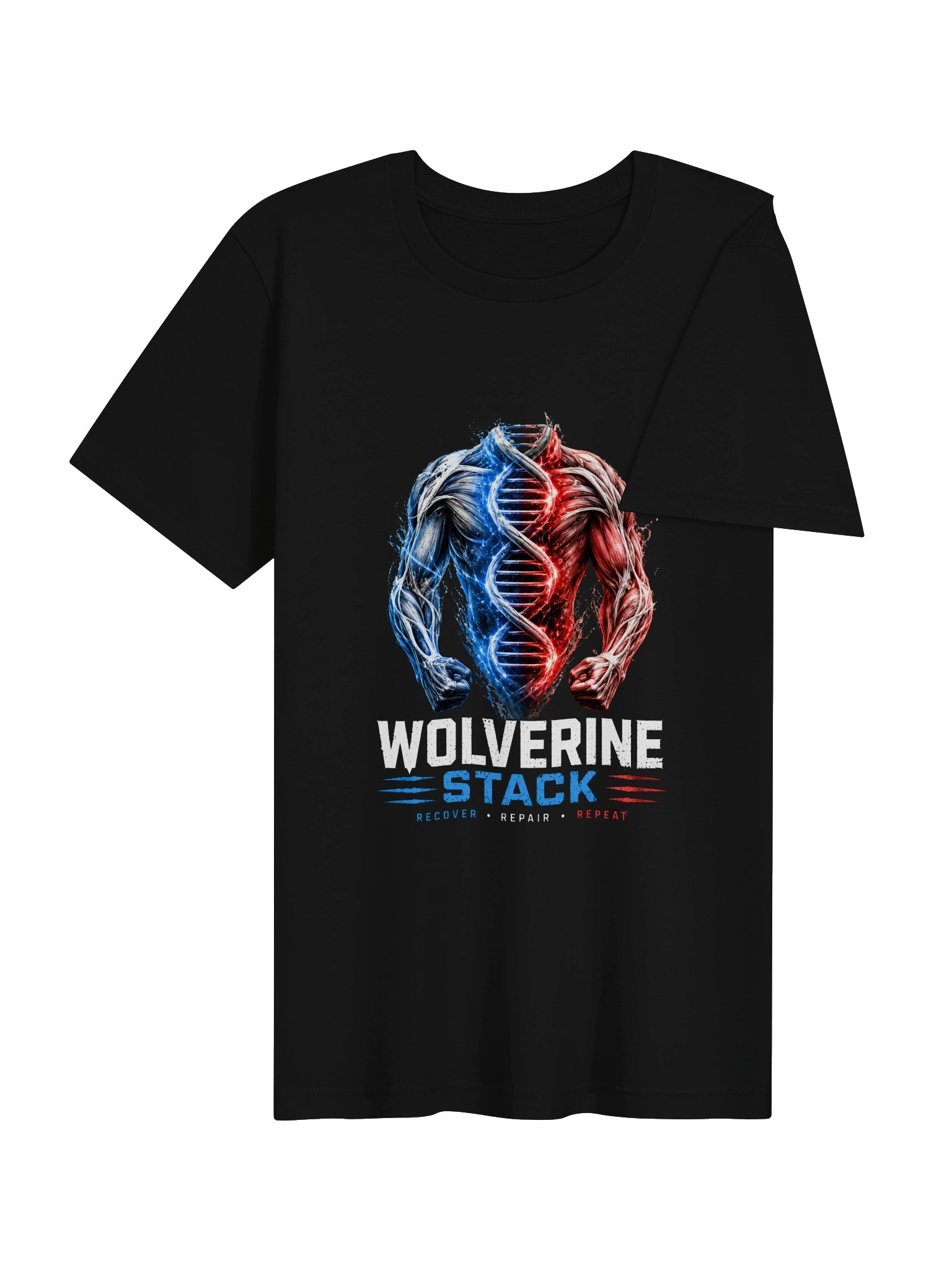
The fascination with the Wolverine Stack represents a growing interest in recovery science, regenerative medicine and the biology behind how the human body repairs itself.
To celebrate this curiosity, Pryhelm created the Wolverine Stack T-Shirt - a science-inspired design featuring a powerful DNA helix, anatomical muscle artwork and the phrase:
Inspired by discussions around BPC-157, TB-500, peptide research and recovery science, this shirt is designed for gym enthusiasts, athletes, biohackers and anyone interested in the future of human performance.
Whether you follow peptide research, enjoy strength training, or simply appreciate unique science-inspired fitness designs, this is a statement piece for people who are fascinated by the relationship between biology and performance.